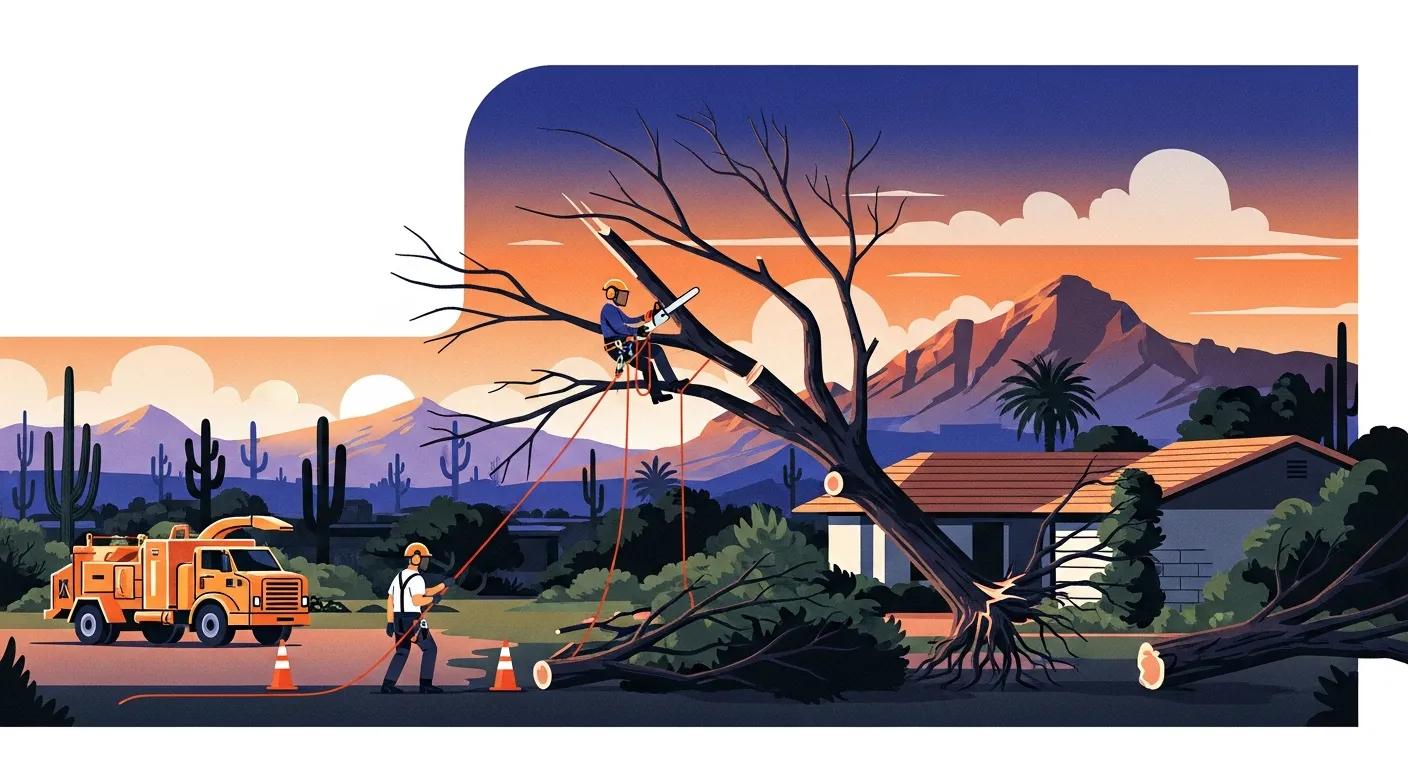
Safe Removal of Hazardous Trees in Phoenix
Expert Hazardous Tree Removal in Phoenix
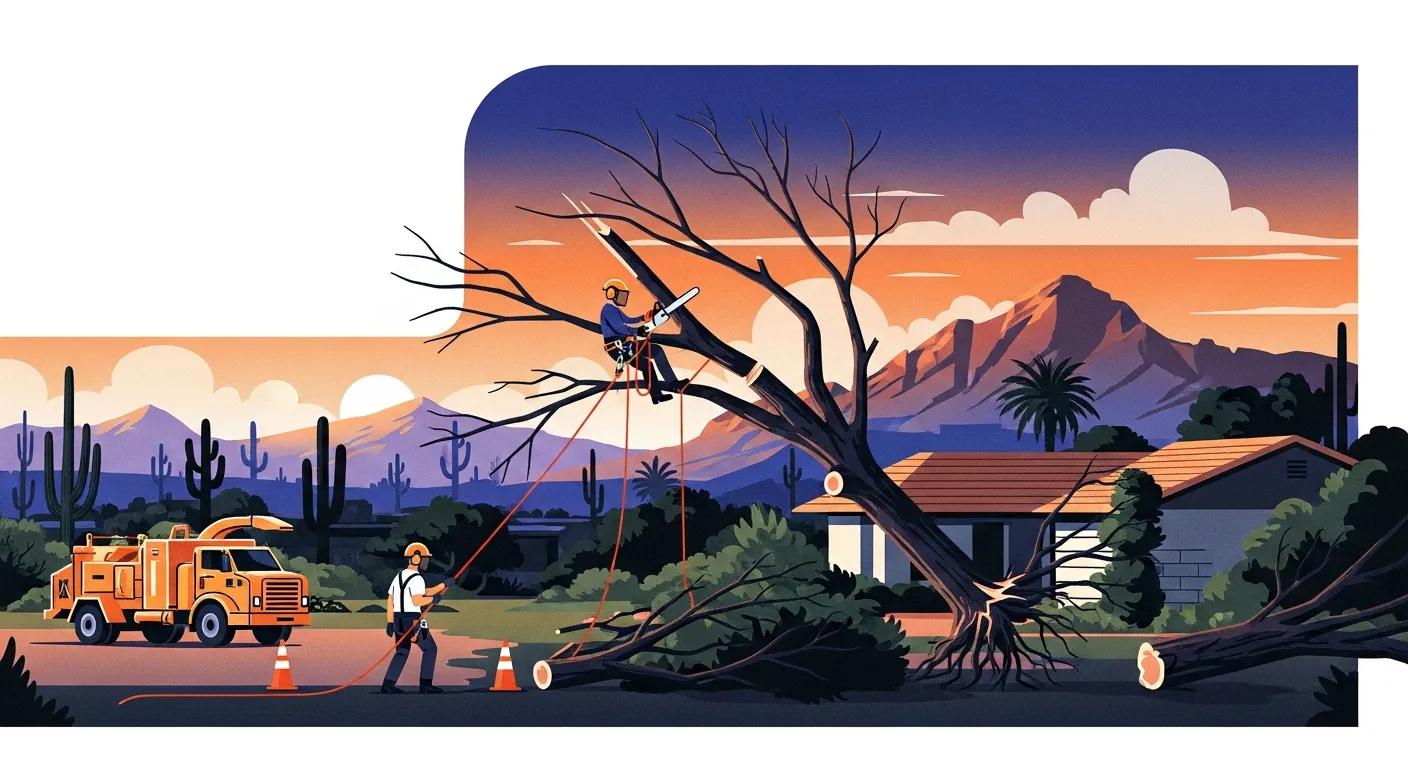
The safe removal of hazardous trees is crucial for maintaining property safety and enhancing the aesthetic appeal of your landscape. In Phoenix, where unique environmental conditions such as intense heat, drought, and occasional monsoon storms can lead to tree instability, understanding the signs of hazardous trees and the processes involved in their removal is essential. This article will guide you through identifying hazardous trees, the importance of tree risk assessments, safe removal techniques, and the costs associated with these services. Additionally, we will highlight how Your Arbor Barber can assist you in ensuring your property remains safe and beautiful.
The complex interplay of environmental factors and urban site conditions significantly impacts tree health and stability in metropolitan areas.
Urban Tree Health: Environmental Stresses & Site Factors
A wide variety of biologically important stresses limit tree growth in cities. Urban areas are very heterogeneous, and different stresses or different degrees of stress may be present even at adjacent planting sites. The disturbed nature of urban soils, with fill, concrete, refuse, and other artifical factors, also contributes to the highly variable environment, even on the same city block.
Tree health in New York City, 1985
What Are the Signs of Hazardous Trees in Phoenix?
Identifying hazardous trees is the first step in preventing potential damage to your property. Hazardous trees can pose significant risks, including falling branches or complete tree failure. Recognizing the signs early can help mitigate these dangers.
How to Identify Dangerous Tree Conditions and Risks
Dangerous tree conditions can be identified through several visual indicators. Look for:
Deep Cracks in the Trunk: These can indicate structural weakness and potential failure.
Leaning Trees: A tree that leans significantly may be unstable and at risk of falling.
Dead or Falling Branches: Branches that are dead or have fallen can signal that the tree is unhealthy and may pose a risk.
Fungal Growth or Mushrooms at the Base: These can indicate internal decay.
Root Damage or Soil Heaving: Signs that the root system may be compromised.
By being vigilant about these signs, property owners can take proactive measures to address hazardous trees before they cause damage.
Which Tree Species Are Commonly Hazardous in Phoenix?
Pine Trees: Often susceptible to pests and diseases, such as pine beetles and pine wilt, leading to structural weaknesses.
Eucalyptus Trees: Known for their rapid growth and shallow root systems, making them prone to falling, especially during storms.
Cottonwood Trees: These trees can become unstable as they age, especially in dry conditions, due to their brittle wood and shallow roots.
Mesquite Trees: While generally hardy, older or poorly maintained mesquite trees can develop structural weaknesses.
Understanding which species are commonly hazardous can help homeowners make informed decisions about tree care and removal.
Further research underscores the prevalence of disease and pest issues impacting urban tree health in Phoenix.
Phoenix Urban Tree Health: Disease & Wounding Impacts
Disease and pest problems were detected in 41% of urban trees, including wood decay, that urban forest health in Phoenix is being negatively impacted by extensive wounding of trees.
Tree health in Phoenix,
Arizona, US, 2013
How Does Tree Risk Assessment Ensure Property Safety in Phoenix?
Tree risk assessments are vital for evaluating the safety of trees on your property. These assessments help identify potential hazards and recommend appropriate actions to mitigate risks.
What Is the Role of an ISA Certified Arborist in Risk Evaluation?
An ISA Certified Arborist plays a crucial role in tree risk evaluation. They are trained to assess tree health and stability, using their expertise to identify risks that may not be visible to the untrained eye. Their evaluations typically include:
Visual Inspections: Assessing the tree's condition and identifying any visible signs of decay, damage, or pest infestation.
Risk Categorization: Classifying the level of risk associated with each tree based on its condition, location, and potential targets.
Indeed, professional risk assessment methods are crucial for guiding arborists through comprehensive tree inspection processes.
Professional Tree Risk Assessment Methods & Process
Experienced arborists can aid in this decision process by conducting a professional risk assessment that specifies the likelihood of whole or partial tree failure, the consequences of such a failure, and the potential targets affected. A variety of risk assessment methods have been developed to guide professionals through the tree inspection process.
Tree risk assessment methods: A comparison of three common evaluation forms: ENH1226/EP487, 11/2013, AK Koeser, 2013
What Are the Steps in a Professional Tree Risk Assessment?
A professional tree risk assessment involves several key steps:
Initial Inspection: The arborist conducts a thorough examination of the tree and its surroundings.
Data Collection: Information about the tree's species, size, health, structural defects, and site conditions is gathered.
Risk Analysis: The arborist evaluates the potential risks and categorizes them based on severity and likelihood of failure.
This systematic approach ensures that property owners receive a comprehensive understanding of their trees' safety.
What Are the Safe Techniques for Hazardous Tree Removal in Phoenix?
When it comes to removing hazardous trees, safety is paramount. Employing the right techniques and equipment is essential to ensure a safe removal process.
Which Equipment and Safety Protocols Are Used for Tree Removal?
Professional tree removal services utilize specialized equipment and safety protocols, including:
Chainsaws: Essential for cutting through large branches and trunks.
Safety Gear: Helmets, gloves, eye protection, ear protection, and harnesses protect workers during the removal process.
Rigging Equipment: Used to control the direction of falling branches and trunks, minimizing damage to surrounding property.
Cranes or Bucket Trucks: Sometimes used for large or hard-to-reach trees.
These tools and protocols help minimize risks during the removal process.
How Does Emergency Tree Removal Address Storm-Damaged Trees?
Emergency tree removal is critical after severe weather events. Storm-damaged trees can pose immediate threats to safety, requiring prompt action. Emergency services typically include:
Rapid Response Teams: Trained professionals who can quickly assess and remove hazardous trees.
Debris Cleanup: Ensuring that fallen branches and trees are cleared to restore safety and accessibility.
Temporary Safety Measures: Such as bracing or cabling to stabilize trees until removal can be safely performed.
By addressing storm-damaged trees swiftly, property owners can prevent further damage and ensure safety.
How Much Does Hazardous Tree Removal Cost in Phoenix?
Understanding the costs associated with hazardous tree removal can help homeowners budget effectively.
Several factors influence the pricing of these services.
What Factors Influence Tree Removal Pricing?
The cost of tree removal can vary based on several factors, including:
Tree Size and Type: Larger trees or those with complex removal needs typically cost more.
Location and Accessibility: Trees in hard-to-reach areas may require additional equipment and labor.
Condition of the Tree: Dead or dying trees may sometimes be easier to remove, but hazardous conditions can increase costs.
Disposal and Cleanup: The amount of debris and cleanup required can affect the price.
Are Emergency Tree Removal Services More Expensive?
Emergency tree removal services often come at a premium due to the urgency and specialized nature of the work. Factors contributing to higher costs include:
Immediate Response Requirements: Emergency services require rapid mobilization and may involve overtime charges.
Increased Risk: The complexity of removing a tree in an emergency situation can lead to higher labor costs.
After-Hours or Weekend Work: Emergency services may be performed outside normal business hours.
Understanding these factors can help homeowners make informed decisions regarding tree removal services.
Why Choose Your Arbor Barber for Hazardous Tree Removal in Phoenix?
When it comes to hazardous tree removal, choosing the right service provider is essential. Your Arbor Barber stands out for several reasons.
What Unique Value Does Your Arbor Barber Offer?
Your Arbor Barber offers expert tree care services designed to protect property and enhance curb appeal. With a focus on safety and professionalism, our team is equipped to handle all aspects of tree removal, from risk assessment to cleanup. Our commitment to customer satisfaction ensures that you receive the best possible service.
What Do Customer Testimonials Say About Our Services?
Customer feedback highlights our dedication to quality and safety. Many clients appreciate our thorough assessments and prompt service, noting that our team goes above and beyond to ensure their properties are safe and well-maintained. This reputation for excellence makes us a trusted choice for tree care in Phoenix.
How Can You Request Professional Hazardous Tree Removal Services in Phoenix?
Requesting professional tree removal services is straightforward and can be done in a few simple steps.
What Is the Process to Get a Free Estimate?
Contact Us: Reach out to Your Arbor Barber through our website or phone.
Schedule an Assessment: We will arrange a convenient time for an ISA Certified Arborist to evaluate your trees.
Receive Your Estimate: After the assessment, you will receive a detailed estimate outlining the recommended services and costs.
When Should You Call for Emergency Tree Removal?
Signs of Immediate Danger: Trees that are leaning dangerously, have large broken branches, or show signs of imminent failure.
After Severe Weather: Following storms, assess your property for any potential hazards such as fallen or damaged trees.
By being proactive and contacting professionals when needed, you can ensure the safety of your property and loved ones.
